
By Dr. Nitza Alvarez, MD, FACC for NITZAMD
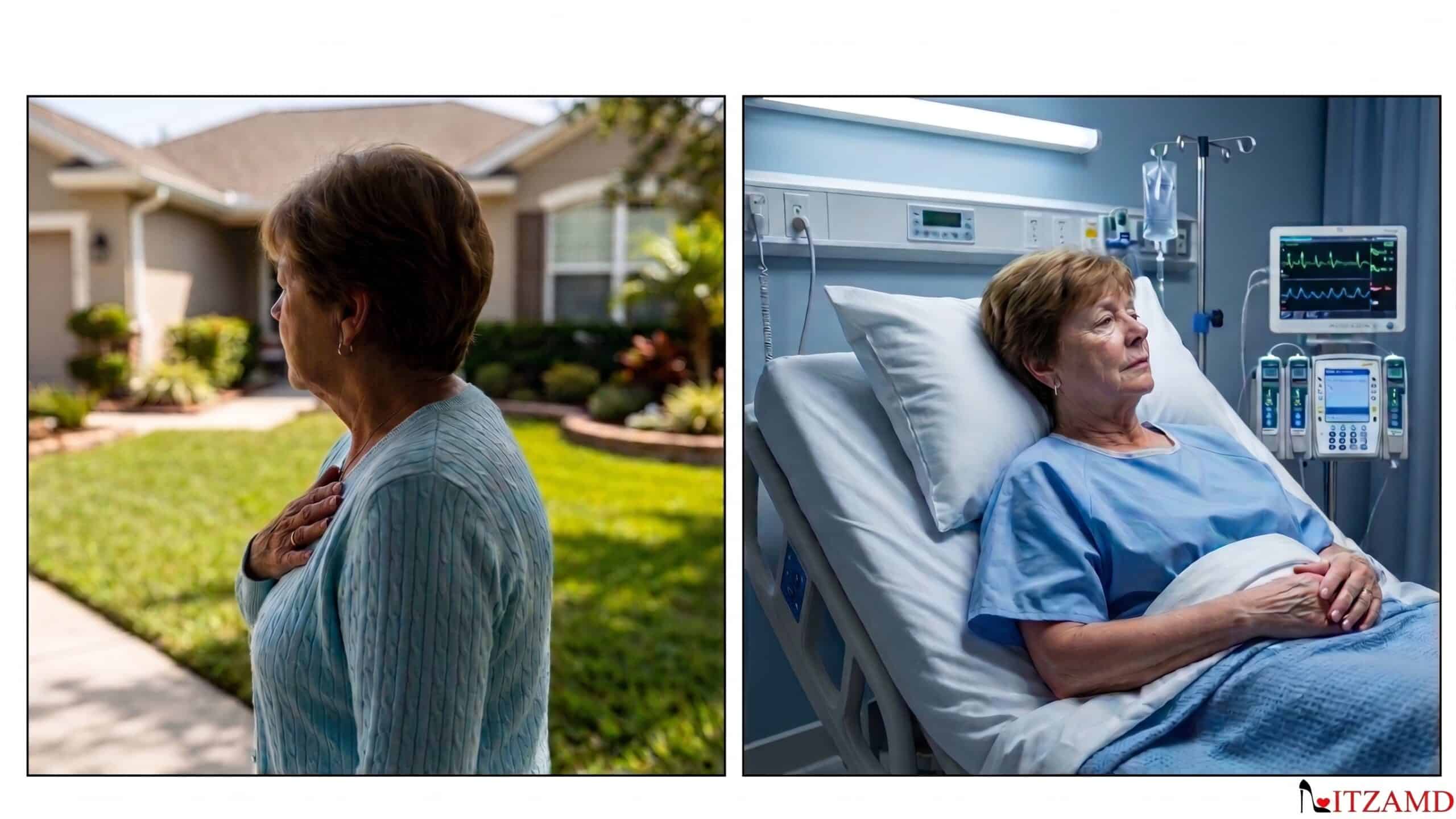
While awaiting a scheduled heart catheterization, Mary Ann Salerno experienced a sudden, severe chest pain while standing in her front yard – a pain completely unlike anything she had ever felt before. Knowing instinctively that she was in acute danger, her family rushed her to the nearest emergency room.
The Role of Context in Emergency Cardiac Care
Upon arriving at the hospital, Mary Ann’s initial emergency workup showed an unremarkable EKG and negative cardiac biomarkers (troponin). Under standard emergency room protocols, a patient presenting with normal labs and no obvious EKG changes is frequently discharged home with instructions to follow up with a primary care provider.
However, Mary Ann possessed a vital piece of advocacy leverage: she clearly informed the emergency staff that her cardiologist had already identified probable blockages and had scheduled a heart catheterization.
Dr. Nitza Alvarez notes: “Having that context changed everything. If Mary Ann hadn’t already seen a cardiologist and articulated her clinical trajectory, the ER staff likely would have escorted her right out the door while her heart tissue was actively compromised.”
Waking Up with Three Stents
The emergency team admitted her immediately, proceeding directly to the catheterization lab. The procedure revealed three severe, critical coronary blockages. Mary Ann woke up not in a day-surgery recovery lounge expecting to go home, but in the Intensive Care Unit with three newly deployed cardiac stents.
Mary Ann’s experience underscores a vital lesson for every woman: emergency room diagnostic tools evaluate whether a heart attack is happening in that exact minute, but they do not rule out severe, unstable underlying disease. Communicating your complete cardiac history and ongoing evaluations is crucial to securing life-saving emergency intervention.
Don’t Wait for an Emergency to Get Answers
If you are living with unexplained chest discomfort, pressure, or a history of cardiovascular risk, proactive evaluation is always safer than an emergency room visit.
Partner with a Doctor Who Listens–Contact NitzaMD
Get clear, accurate data about your vascular health before a crisis occurs. Contact our Leesburg office today to take control of your heart care.
Disclaimer: This content is for educational and informational purposes only and is not a substitute for professional medical advice, diagnosis, or treatment. Always seek the advice of your physician or other qualified health provider with any questions you may have regarding a medical condition. Never disregard professional medical advice or delay in seeking it because of something you have heard or read here