
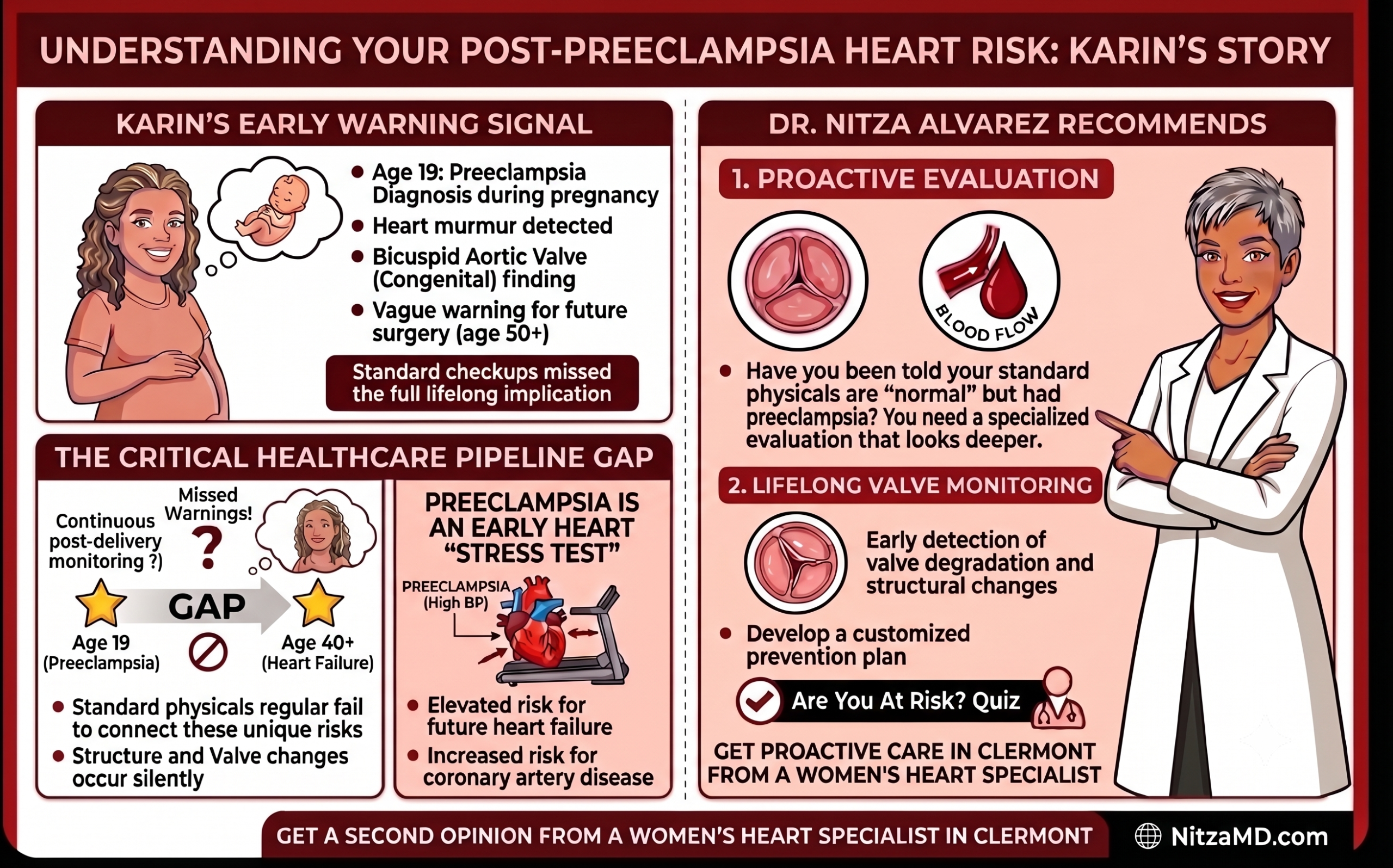
When Karin McNeil was 19 years old and pregnant with her oldest son, she developed preeclampsia—a dangerous condition characterized by high blood pressure during pregnancy. She delivered her baby four weeks early, and a subsequent echocardiogram revealed she had been born with a bicuspid aortic valve. Her medical team gave her a vague warning that she might need open-heart surgery by the time she turned 50, but no one explained the lifelong connection between her pregnancy complications and her long-term cardiovascular health.
Many women in Clermont are entirely unaware that complications during pregnancy, such as gestational diabetes or preeclampsia, act as an early “stress test” for the heart. Developing high blood pressure during pregnancy drastically elevates your statistical risk for heart failure and coronary artery disease later in life. Unfortunately, because of gaps in the traditional healthcare pipeline, once a woman delivers her baby, the vital connection between her obstetric history and her future cardiac health is often completely lost.
This lack of continuous, specialized monitoring is a major reason why standard physicals are not always enough to protect you. As we highlighted in our discussion on “Why Your Heart Needs More Than a “Superficial” Checkup”, standard lab work and routine checkups regularly fail to connect the dots of a woman’s unique medical history.
Preeclampsia Risk
If you experienced preeclampsia during a pregnancy years ago and reside in Clermont, you should not wait until you hit your 50s to get checked. Proactive cardiovascular management can identify valve degradation and structural changes before they turn into an emergency.
Medical disclaimer: This article is for education only and does not replace medical advice. Seek emergency care for severe symptoms.