
By Dr. Nitza Alvarez, MD, FACC for NITZAMD
When we picture a classic, textbook heart attack, our minds immediately fly to a cinematic scene: an older man clutching his chest in agony, experiencing crushing pain down his left arm, and collapsing. Because this male-centric profile has dominated medical education and pop culture for decades, society—and even emergency medical professionals—consistently fail to recognize when a young, active woman is experiencing a cardiovascular crisis.
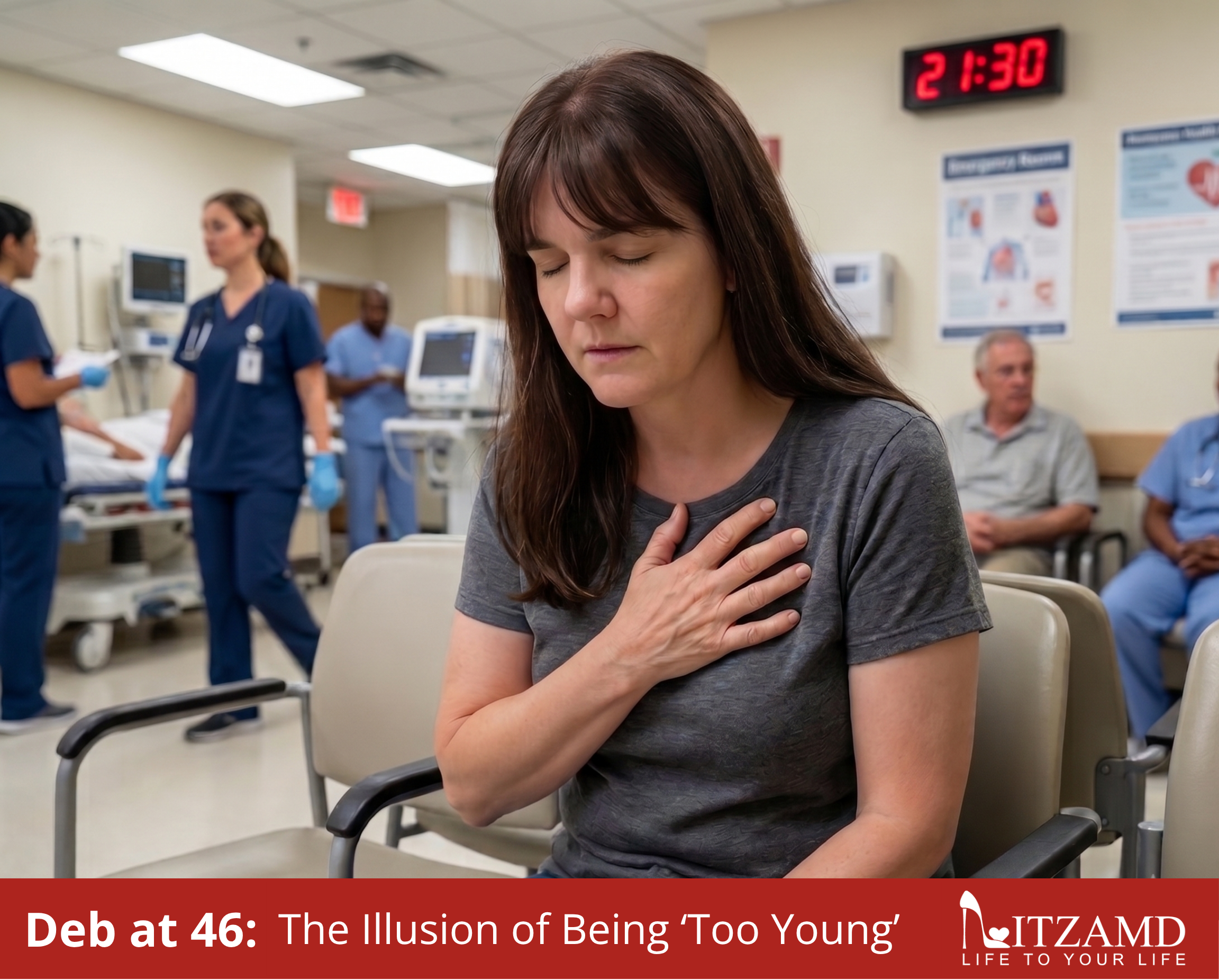
At age 46, Deb Williams woke up feeling completely normal. By the end of the night, she was fighting for her life in an emergency room that didn’t view her as a priority simply because she didn’t “fit the bracket.”
The Dangerous Illusion of Being “Too Young”
A few days prior to the event, Deb had undergone a medical evaluation where everything looked stable. But on this particular evening, an overwhelming, unnatural fatigue washed over her on the drive home from a restaurant. Suddenly, she began feeling incredibly nauseous and dizzy.
As she stepped out of the car, a terrifying, heavy sensation crept over her: a deep, unshakeable psychological feeling of absolute doom.
She was so physically weak she nearly collapsed onto the garage floor. Once inside the house, she lay flat on the floor and told her family to call an ambulance immediately. By that point, her physical symptoms had progressed into the classic textbook indicators: her left elbow was radiating with severe pain, and it felt like a massive elephant was sitting directly on her chest, leaving her completely unable to expand her lungs for a breath.
Yet, when the paramedics arrived at her home, their response was staggeringly dismissive: “Oh no, you’re way too young to be having a heart attack.”
The Emergency Room Protocol Failure
Because the paramedics labeled her as “too young,” they didn’t treat her case with emergency priority. When they arrived at the local Central Florida emergency room, the clinical staff placed her in a basic cubicle, showing very little urgency or immediate concern.
To the ER staff, Deb looked healthy, relatively thin, and young. They began looking for any alternative diagnosis besides a primary heart problem—completely ignoring her textbook left-arm radiation and crushing chest pain.
Thankfully, Deb had a fierce ally. Her family primary care physician caught wind of the emergency and met the ambulance directly at the cubicle door. The moment she arrived, she bypassed the sluggish ER bureaucracy and began aggressively barking out orders for immediate cardiac interventions, EKGs, and labs.
Sure enough, the tests confirmed the reality: Deb was actively suffering from a massive, life-threatening heart attack.
Dr. Alvarez’s Insight: “If Deb’s personal physician hadn’t stepped in to shatter that institutional bias, she would have continued to lay in that ER bed waiting for routine lab work while her heart tissue was actively dying. Heart disease does not care about your age, your weight, or how healthy you look on the outside.”
Listen to Your Heart, Not Their Bracket
Deb’s family history was riddled with uncles who died from cardiovascular events at exactly age 46. She fit her family’s genetic profile perfectly, yet the medical system almost cost her her life because they preferred their generic clinical brackets over her specific genetic reality.
Women do not always present with the identical, dramatic symptoms as men, but even when they do experience classic chest and arm pain, they are still routinely misdiagnosed as having panic attacks or acid reflux. If you are experiencing an acute, unexplainable sense of doom, severe upper-body fatigue, or chest discomfort, do not let an EMT or an emergency room nurse convince you to wait. Demand an EKG. Demand a troponin test. Trust your gut, advocate for your life, and remember that when it comes to a heart attack, seconds equal survival.